Games
Control Resonant proves Remedy is unmatched at bending game design and narrative
The sequel transforms platforming and combat into something wildly inventive by letting players manipulate gravity across a warped Manhattan.

The Verge
Remedy's new sequel demonstrates why few studios command gravity—literal and creative—quite like the Finnish developer. Control Resonant takes the paranormal-investigation premise of 2019's Control and transplants it into a sprawling, reality-bending rendition of New York City where the laws of physics bend to match the game's ambitions.
A New Protagonist, a Warped World#
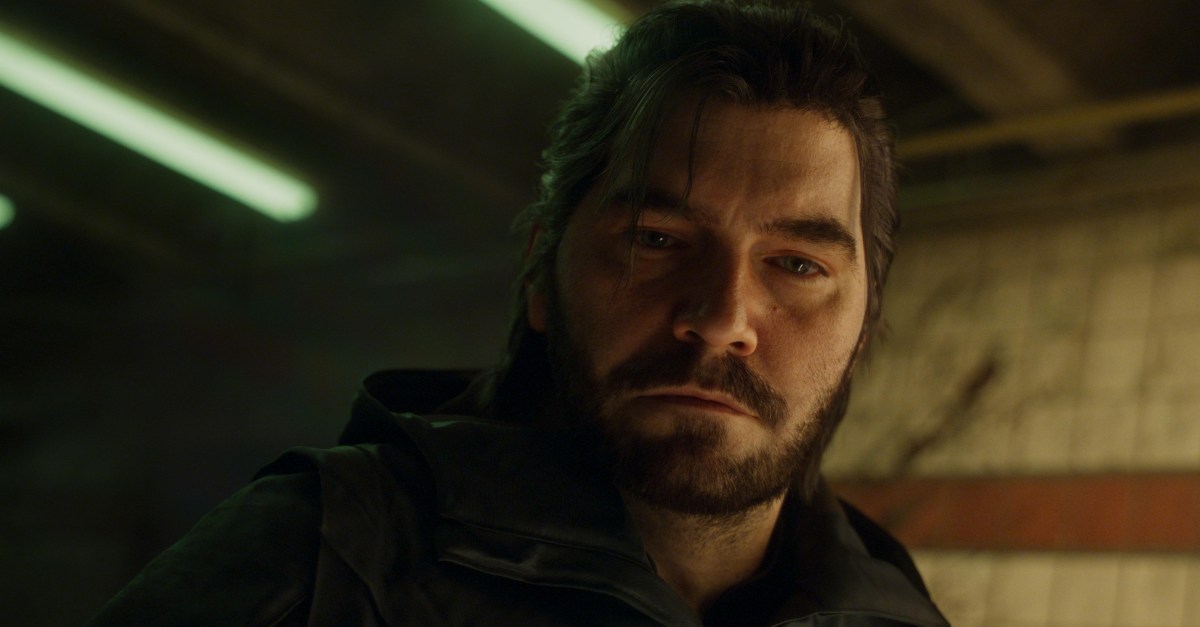
You now play Dylan, Jesse Faden's brother, navigating Manhattan as it falls under siege from interdimensional forces that warp its architecture into impossible geometries. Unlike the original Control's confinement to the Oldest House, Resonant unfolds across an open world where buildings twist mid-air and gravity shifts without warning. The shift extends to combat and movement too: whereas the first game centered on gunplay, Dylan wields a morphing melee weapon that alternates between forms like whips and hammers.
Movement as Revelation#
The early hours feel deceptively conventional—just another open-world action game with missions and boss encounters. That facade shatters once Dylan's suite of mobility powers coalesces. Temporary flight, mid-air dashing, wall-walking, double-jumping, and warp abilities transform navigation from functional into euphoric. Mastering their synergy turns traversal itself into a pleasure, one that naturally feeds into fiendish platforming sequences and spatial puzzles that demand creative thinking.
Narrative Layering and Strangeness#
Resonant leans into the worldbuilding Remedy honed across Control and Alan Wake. Its sci-fi DNA echoes properties like Severance and the SCP Foundation, yet adapts them for interactive storytelling through field recordings, scattered documents, and radio conversations with handler Zoe. Missions escalate from the mundane—say, replacing light bulbs—into the surreal, such as hailing ghost taxis or reasoning with sentient electrical equipment. The narrative sprawl weaves alternate dimensions, fractured timelines, and supernatural threats into something genuinely unsettling.
Visual and Sonic Mastery#
The game excels as a style statement. Combat feels punchy; platforming sections evoke interactive art installations; an entire map section resembles M.C. Escher's geometry caught in golden-hour sunlight. An opening credits sequence rivals HBO-caliber television drama. That audiovisual cohesion—reinforced by industrial sound design—elevates the mechanical experience into something memorable.