Quantum Computing
IBM's Modular Quantum Refrigerator Clears First Milestone Toward Scalable Systems
IBM has successfully cooled the first two modules of a new cryogenic system designed to support future fault-tolerant quantum computers with thousands of qubits.

The New Stack
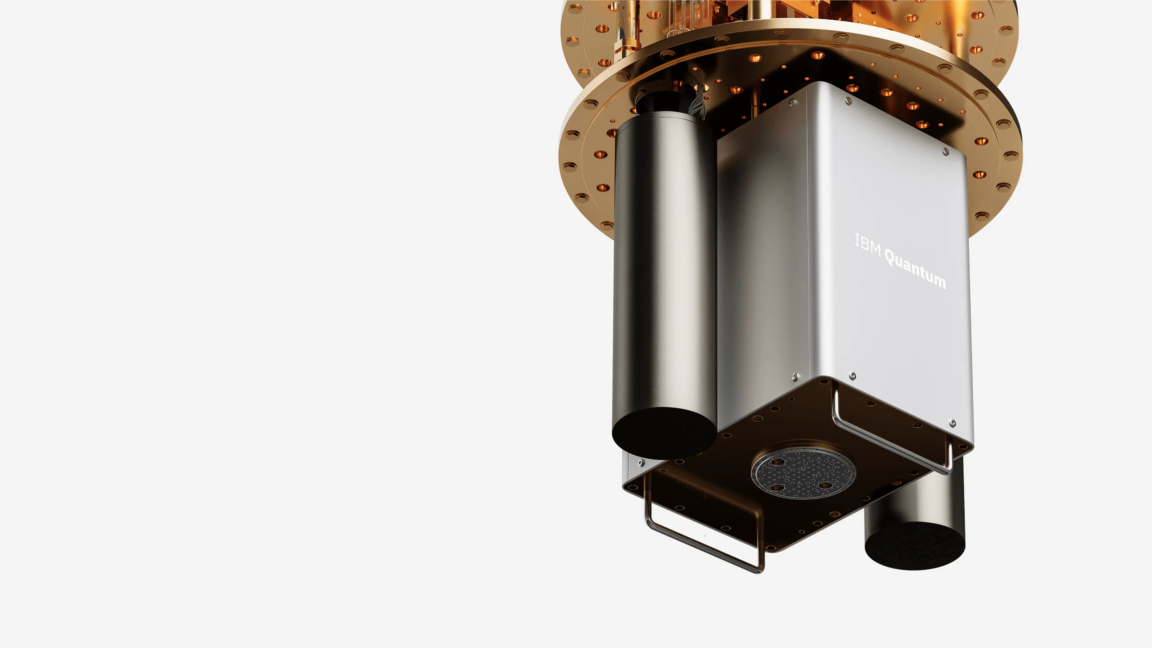
IBM recently unveiled its progress on a next-generation cryogenic cooling system designed to support the company's push toward practical, large-scale quantum computers. The company has already built and tested the first two modules of the modular dilution refrigerator, marking an important engineering milestone as the field moves from dozens of qubits to thousands.
The system is not yet operating with actual quantum processors—that test comes later in 2026 when IBM plans to install its Nighthawk processors into each module. This initial validation will be critical: it will demonstrate that processors can function properly within the new refrigerator architecture and communicate reliably across the links connecting separate modules, a capability essential to IBM's scaling strategy.
The Challenge of Cooling at Scale#
Quantum processors built from superconducting qubits must operate near absolute zero—fractions of a degree in kelvin—to minimize thermal noise that degrades computation. As systems grow larger, the cooling challenge becomes more complex. Adding qubits means adding control wires, readout lines, shielding, and electronics, all of which generate heat and must fit within or around the cryogenic chamber without disrupting the ultra-cold environment.
IBM's approach decouples refrigeration into rectangular, interconnected modules that create a shared cryogenic space. The initial two modules span approximately 8 feet in both height and width and can cool to below 15 millikelvin. In tests with a simulated 30-microwatt heat load—representing future processors and their supporting infrastructure—the system achieved stable operation at 23 millikelvin.
Wiring Space and Modularity#
Current IBM quantum systems house processors with 100+ physical qubits, but fault-tolerant computers will require thousands—later hundreds of thousands—of physical qubits to generate a usable number of error-corrected logical qubits. Each additional qubit demands more wiring.
The new modules provide roughly 12 times more wiring space than IBM's 2019 Quantum System One, the company's first commercial machine. The modular design itself offers operational advantages: individual cells can be built and tested separately before shipment, then connected on-site. If a future processor generation requires different wiring arrangements, that assembly can be swapped without rebuilding the rest of the refrigerator.
Connecting Separate Processors#
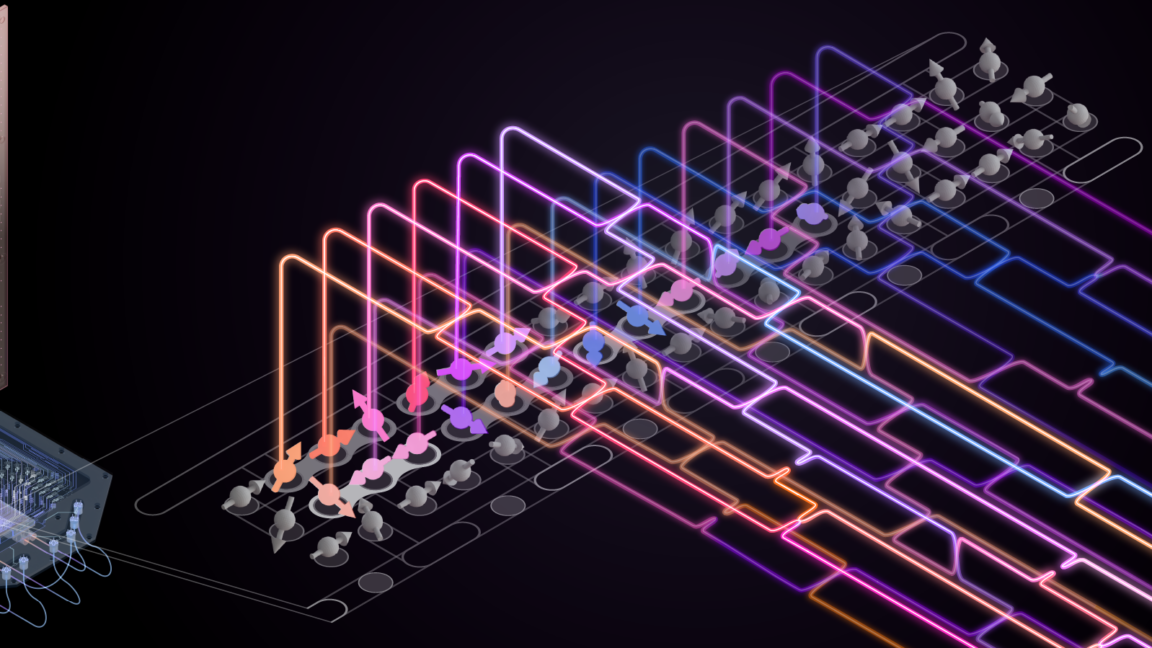
A core challenge lies in networking quantum processors across different modules. IBM is developing the L-coupler, a superconducting cable that carries microwave photons between chips up to a meter apart. It can transfer quantum states or perform two-qubit operations between separate processors. IBM demonstrated this technology with Flamingo, a prototype linking two Heron processors, and has achieved 99.3% fidelity on two-qubit operations across the coupler—targeting 99.9% for fault-tolerant systems.