AI
Anthropic's Claude launches feature to quantify your AI reliance
A new dashboard tracks your Claude usage patterns, subtly reinforcing the chatbot's role in your daily workflow while framing AI adoption as a mindful choice.

TechCrunch — AI
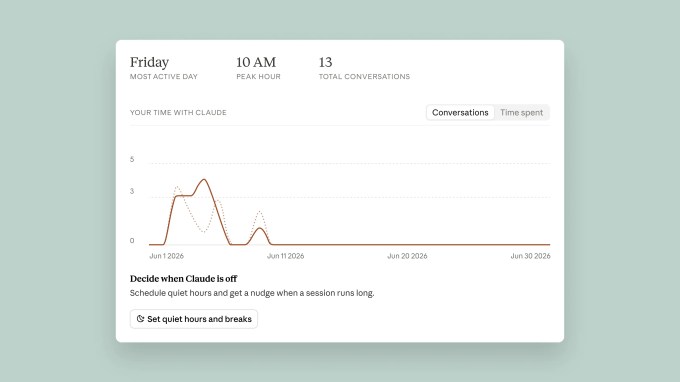
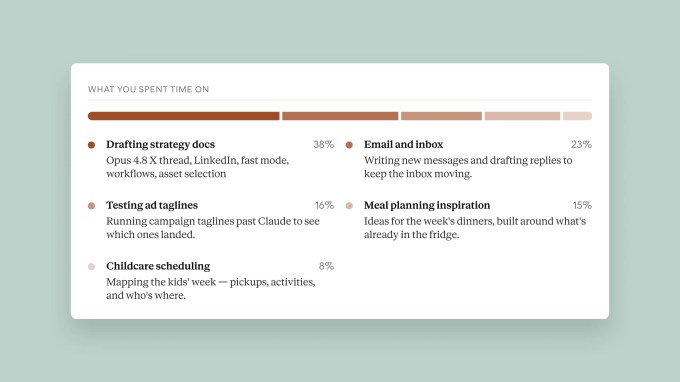
Anthropic has introduced Reflect, a new analytics dashboard for Claude that visualizes your interactions with the AI system and tracks broader usage habits. The feature arrives as skepticism toward AI infrastructure intensifies, with growing concerns about AI backlash and data center environmental impacts dominating recent headlines.
How Reflect Works#
The dashboard presents insights into conversation topics, usage frequency, and the types of tasks users delegate to Claude. By compiling this information into visualizations, Reflect makes the scope of your AI dependency concrete and visible. The feature also periodically surfaces reflective prompts—such as "What's one thing you want to keep doing yourself, even if Claude could do it faster?"—designed to encourage intentional use.
Additional settings let users establish quiet hours or schedule reminders to step away from the tool, acknowledging the potentially habit-forming dynamics of conversational AI.
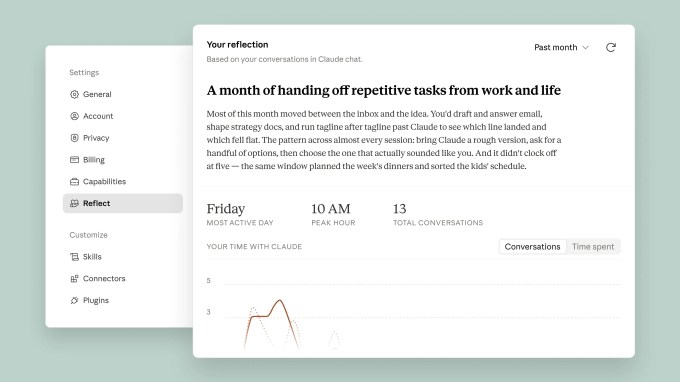
Image Credits: Anthropic
The Deeper Purpose#
While Reflect appears to be a straightforward productivity metric, its function extends beyond transparency. By rendering your reliance on Claude visible and normalized, the dashboard reinforces the chatbot as an indispensable element of your workflow. The feature positions Claude not as an optional experiment but as an established part of everyday life—a psychological effect similar to earlier analytics tools.
In 2012, Google introduced Gmail Meter, which visualized email traffic and storage, effectively demonstrating how central the service had become to users' digital routines. Claude's Reflect follows this playbook but goes further: it trains users on optimization strategies.
Behavioral Shaping and Lock-in#
The feature recommends workflow adjustments—such as using Claude's Projects feature to avoid re-explaining context across sessions—that deepen integration with Claude's ecosystem. This strategic guidance serves dual purposes: it improves the user experience while subtly increasing switching costs and attachment to the platform.