Transportation
Waymo challenges Tesla's camera-only approach as insufficient for true autonomous driving
Waymo's top software executive argues that relying solely on cameras cannot achieve safe, fully autonomous vehicles at scale—a direct rebuke of Tesla's strategy.

The Verge
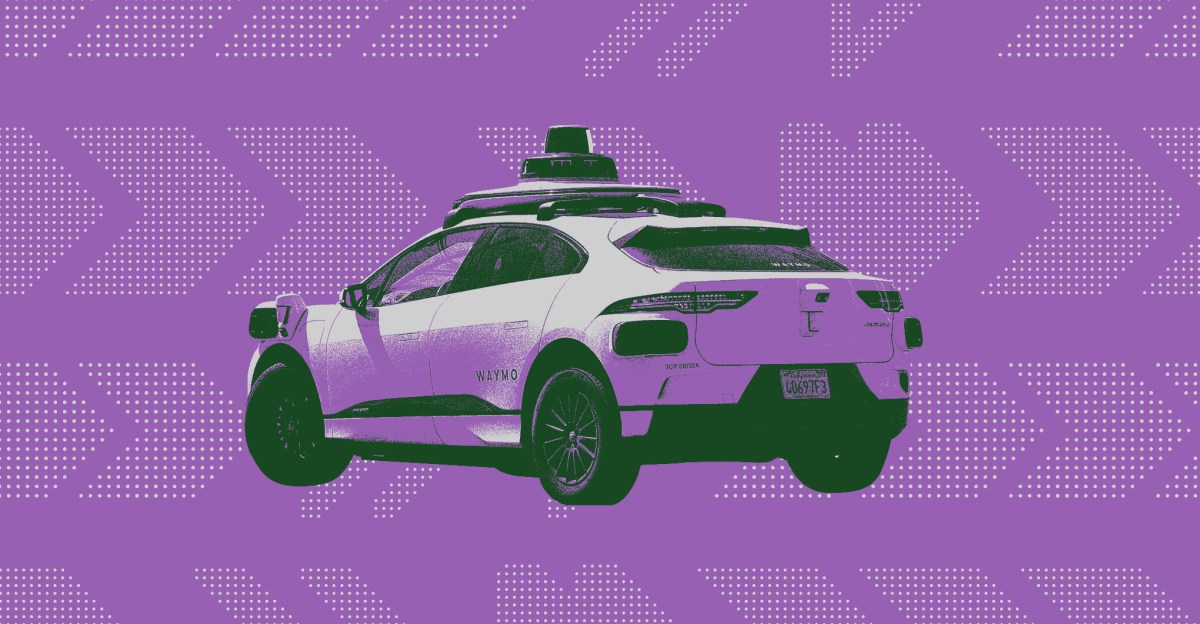
Waymo is taking aim at Tesla's autonomous vehicle strategy, with the robotaxi company's software leadership arguing that camera-only perception cannot support truly driverless operations. The criticism comes as Tesla prepares to launch its steering wheel and pedal-less Cybercab.
The case for multiple sensors#
In a new blog post, Srikanth Thirumalai, Waymo's VP of Onboard Software, contends that full autonomy demands sensor redundancy. After accumulating more than 200 million real-world autonomous miles, Waymo has concluded that cameras alone are insufficient. "Safe, fully autonomous operations at scale require more," Thirumalai writes, emphasizing how the company combines cameras, lidar, and radar to build "a rich, redundant world view that no single sensor can replicate."
This multi-sensor approach offers a critical safety advantage: if one sensor fails, the vehicle remains guided by backup systems rather than becoming completely disabled. Nearly all autonomous vehicle operators—including Zoox and Motional—embrace this principle. Tesla stands alone in betting that cameras suffice.
Tesla's contrarian bet#
Elon Musk has long dismissed lidar as "a crutch," arguing that since humans drive using primarily their eyes, autonomous vehicles should too. His reasoning underpins Tesla's vision-only architecture, which feeds vast amounts of training data into deep learning systems. The company's strategy assumes that sufficient scale and computational sophistication will eventually overcome any perceptual limitations inherent in a single-sensor approach.
However, this path faces regulatory headwinds. New Jersey's legislature is weighing a bill that would legalize robotaxis only if they use multiple sensors—effectively banning Tesla's camera-only design from operating there.
Beyond sensors: maps and system architecture#
Waymo's critique extends further. While Musk views high-definition maps as counterproductive—believing vehicles should adapt instantly to changing road conditions without relying on pre-loaded information—Waymo treats maps as a valuable "prior" that accelerates deployment and validation. Thirumalai notes that Waymo's AI-driven mapping system continuously updates these references, creating "a reliable, high-fidelity" foundation for complex maneuvers.
The company also emphasizes that truly autonomous systems cannot evolve from driver-assist platforms. Thirumalai states that no amount of iteration on Level 2 systems (which require active human monitoring) can achieve Level 4 full autonomy. Instead, purpose-built autonomous architecture, validated on closed courses and hardened through unsupervised operation, is necessary.