AI
Talos Platform Delivers 241 New Rare Disease Diagnoses Through Automated Genomic Reanalysis
Microsoft and international partners deployed an open-source tool that continuously re-examines genetic data as knowledge evolves, yielding diagnoses in under a month on average.

Microsoft Research Blog
Over half of patients with rare genetic diseases remain undiagnosed after initial testing, not because of technical limitations but because scientific knowledge about the genome is incomplete and constantly evolving. A new automated system called Talos is changing that by continuously reanalyzing stored genetic data as new discoveries emerge.
Developed by the Centre for Population Genomics, Australian Genomics, the Broad Institute, and Microsoft, Talos is an open-source tool designed to systematically revisit genomic data whenever scientific understanding advances. The collaboration published results showing the approach can scale across thousands of patients while remaining operationally lean.
How it works#
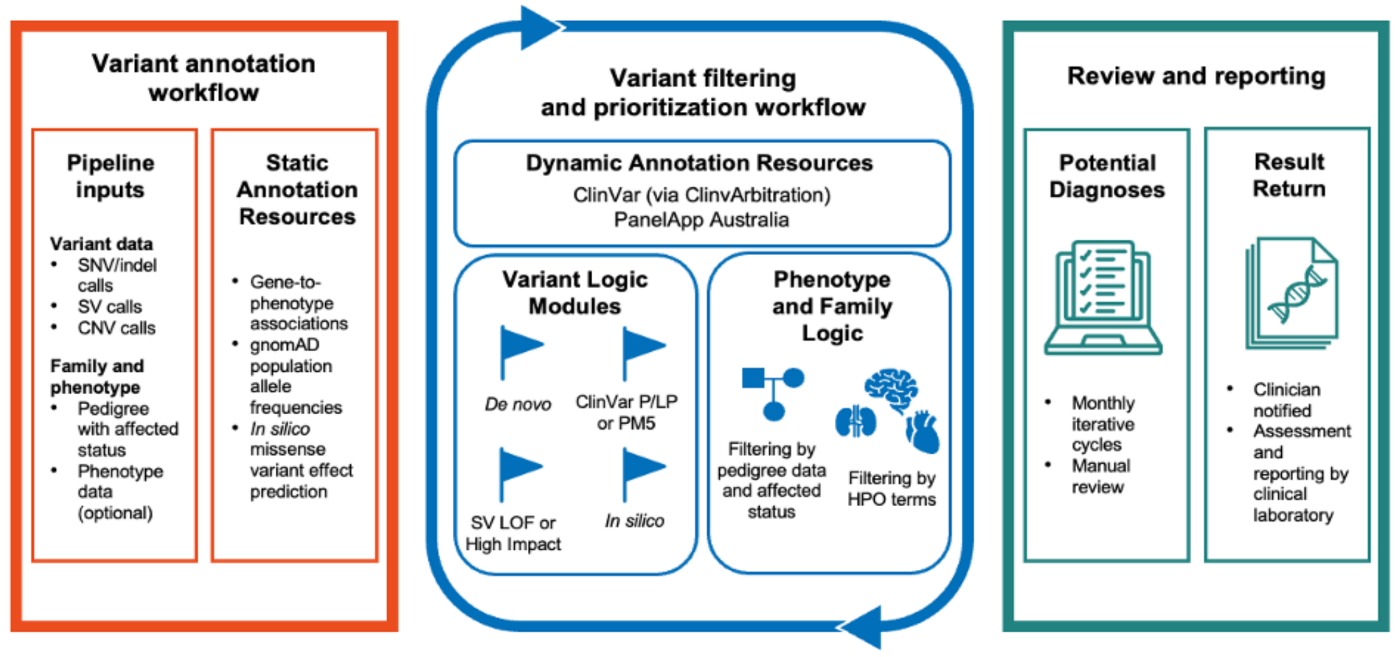
Talos re-interprets existing genetic variants against the latest community knowledge by tapping two continuously updated public resources: PanelApp Australia for gene–disease relationships and ClinVar for variant classifications. A variant-prioritization algorithm surfaces candidates most likely to meet clinical reporting criteria.
The platform is deliberately conservative—returning a small set of high-confidence variants rather than long ranked lists—because human expert review time is the limiting factor in real-world reanalysis. On repeat cycles, it flags only variants with newly updated evidence, allowing clinicians to focus on genuinely new findings.
Validation results#
The team benchmarked Talos on two independent cohorts totaling 1,089 patients who had already undergone expert manual analysis. On Australian Acute Care Genomics trios, it recovered 90% of expected diagnoses while flagging a median of just 1.3 candidate variants per family. It showed similar performance on the U.S.-based Rare Genomes Project cohort (87% recovery), demonstrating consistency across different patient populations and disease types.
A head-to-head comparison with Exomiser, a widely used prioritization tool, showed both recovered similar overall sensitivity for small variants—but at very different operating points. When review budgets were realistic, Talos significantly outperformed Exomiser by surfacing fewer, more actionable candidates.

