AI
Three autonomous-systems leaders tackle safety and readiness in high-stakes AI deployment
When AI controls aircraft, vehicles, and robots, the margin for error disappears—and so does the definition of "ready."

TechCrunch — AI
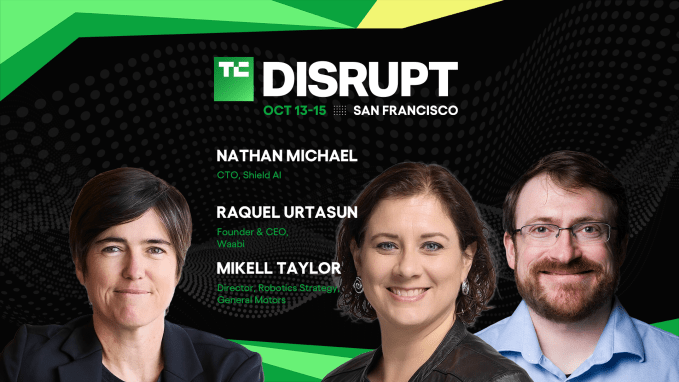
The stakes look fundamentally different when artificial intelligence leaves the lab. A recommendation algorithm that falters is an inconvenience; an autonomous aircraft, self-driving vehicle, or industrial robot that fails can cause real harm. That gap between theoretical and deployment-ready sits at the heart of a TechCrunch Disrupt 2026 panel discussion bringing together leaders from three mission-critical domains.
The panelists and their work#
Shield AI's Nathan Michael has built his career around autonomous systems where failure carries consequences. As chief technology officer, he oversees development of Hivemind, a mission autonomy platform designed to work across different hardware platforms. His background spans robotics research, artificial intelligence, and multi-agent systems—including leadership roles at Carnegie Mellon University's Robotics Institute. Earlier this year, Shield AI secured its Hivemind platform as an autonomy provider for the U.S. Air Force's Collaborative Combat Aircraft program and raised $1.5 billion at a $12.7 billion valuation.
Raquel Urtasun, founder and CEO of Waabi, brings nearly three decades of work in AI and driverless vehicles. Before launching Waabi, she served as chief scientist and head of R&D at Uber ATG and maintains a faculty position at the University of Toronto while co-founding the Vector Institute for AI. Her company recently raised $1 billion and announced a partnership with Uber to deploy more than 25,000 robotaxis powered by Waabi's driving software. The company leans heavily on simulation and testing—its Waabi World platform allows exhaustive stress-testing in virtual environments before real-world operation.
Mikell Taylor, who leads robotics strategy for General Motors, spent over two decades designing robots built for practical work. She previously led the Amazon Robotics team that created Proteus, Amazon's first fully autonomous mobile robot. Her perspective spans autonomous underwater vehicles and industrial systems, with a consistent focus on robots that function reliably around people.